بيت صدق
Beit Tzedek / Sidq
בית צדקA bilingual Arabic–Hebrew high school in Jaffa
"Rigorous minds. Brave hearts. Joyful community."
A bilingual Arabic–Hebrew high school in Jaffa
"Rigorous minds. Brave hearts. Joyful community."
Beit Tzedek / Sidq High School is a bilingual Arabic–Hebrew home in Jaffa where students pursue rigorous study and courageous dialogue, bringing their full and layered identities into shared learning. Our community explores the past, confronts the present, and prepares young people to build power to shape a more just society, grounded in multiple histories and unequal realities.
ثانوية بيت صدق هي بيت ثنائي اللغة، عربي–عبري، في يافا، حيث يتعلم الطلاب بعمق ويتحاورون بشجاعة، حاملين هوياتهم الكاملة والمتعددة إلى فضاء تعلم مشترك. يستكشف مجتمعنا الماضي، ويواجه الحاضر، ويهيّئ الشباب لبناء قوة تُمكّنهم من تشكيل مجتمع أكثر عدلاً، انطلاقًا من تعدد الروايات التاريخية وواقع عدم المساواة.
תיכון בית צדק הוא בית דו־לשוני ערבי–עברי ביפו, שבו תלמידים לומדים לעומק ומשוחחים באומץ, ומביאים את מלוא זהויותיהם המורכבות אל תוך למידה משותפת. קהילתנו חוקרת את העבר, מתמודדת עם ההווה, ומכשירה צעירים לבנות כוח ולעצב חברה צודקת יותר—מתוך הכרה בריבוי היסטוריות ובמציאויות לא שוויוניות.
Six reasons Beit Sidq is different.
Whose stories are told, in what language, and by whom — these are questions of power.
In History class, students read Herzl's Der Judenstaat alongside al-Sakakini's diaries — each group works to understand what question their author was asking, and what answer they arrived at. Then they read the texts side by side.
We make space for storytelling and voices that are often left out — not as an add-on, but as the foundation of how we learn.
In our street signage unit, students walk Jaffa analyzing which languages appear on signs, in what order, and what's been erased — then design alternatives that reflect their values.
Rigorous Bagrut preparation AND critical, justice-oriented pedagogy.
Students prepare for national matriculation exams while also studying Mathematics through Jaffa's changing demographics — building graphs from real census data spanning 1880 to present.
Two co-directors with equal authority — one Jewish Israeli, one Palestinian Israeli.
Co-teaching teams plan every humanities lesson together. Which texts to teach, which narratives to center, which questions to raise — these decisions are made collectively with school leadership. More voices, not fewer.
We recognize and name structural inequalities — in society and in education — and hold ourselves accountable to working against them.
Our sliding-scale tuition guarantees that no family is turned away.
Arabic and Hebrew as equal languages of instruction — not one dominant, one decorative.
Language classes are taught entirely in the target language — no reverting to Hebrew when students struggle. Theatre rehearsals, assemblies, signage, and daily greetings all happen in both languages.
This is the day we are building toward.
My name is Nour, and every morning I take the bus from Ajami. I pass the clock tower, the old port, the new condos going up where my grandmother's home used to be.
In Advisory, Yonatan reads Amichai in Hebrew, then tries Arabic. He stumbles, and I help him with the pronunciation. Yesterday, I was the one stumbling through a Hebrew conjugation, and he didn't laugh.
In History, co-taught by Rina and Samir, my group reads al-Sakakini's diaries while another reads Herzl. We each work to understand what our author was asking — and what answer they arrived at. Then we come together and read them side by side. Samir doesn't try to resolve it. He says: "Sit with it."
In Religion & Ethics: "Should we always forgive?" — Talmud, Qur'an, the prodigal son. I'm wondering what forgiveness looks like. How do we begin to repair?
In English, we read MLK's Letter from Birmingham Jail. The assignment: "Write your own letter from somewhere." I write from Yefet Street.
On the bus home, the clock tower looks different — because I have more words now for what I'm seeing.
The Beit Sidq model in practice.
We set our own curriculum. Students prepare for Bagrut — and become critical thinkers who question, analyze, and create.
Equal Arabic & Hebrew. Language classes in target language only. Actively resisting linguistic dominance.
Depth over coverage. Time to read, discuss, write, and create.
Jewish Israeli & Palestinian Israeli teachers side by side. Multiple narratives, one classroom.
Literature, film, oral history, sacred texts, art — windows into our own cultures and others, and into the layered identities we carry.
Bilingual devised theatre. Risk-taking, rehearsal, performance in both languages.
A brave space for honest dialogue — not debate. Understanding, not persuasion. Facilitated by co-teachers.
Cross-grade projects, all-school gathering. School ends early — families eat together.
Three pillars of Beit Sidq graduates.
Self-aware through inquiry. Can articulate layered identities and revise thinking with humility.
Fluent in Arabic, Hebrew, and English. Hold multiple narratives without collapsing complexity.
Analyze power, move from learning to informed action. Knowledge as both opportunity and obligation.
10th Grade · Theme: "Belonging & Displacement"
שייכות ועקירה · الانتماء والتهجير
90-min blocks · Co-taught humanities · Student voice in every subject · Friday = projects & community (ends 12:30, parents welcome)
| Time | Sunday ראשון / الأحد | Monday שני / الاثنين | Tuesday שלישי / الثلاثاء | Wednesday רביעי / الأربعاء | Thursday חמישי / الخميس | ★ Friday שישי / الجمعة |
|---|---|---|---|---|---|---|
| 8:00–8:20 | Advisory Morning Circle · מעגל בוקר · حلقة صباحية Student DJ each morning — a student or pair present a poem, song, or artifact that brings them joy and explain its significance. Done in Hebrew and Arabic (students support non-natives and prepare together). | 🌟 All-School Gathering Students share learning highlights from the week. Music, spoken word, short presentations. Parents & community invited. | ||||
| 8:30–10:00 | History עב+ערBirth of nationalisms: Herzl's Der Judenstaat alongside al-Sakakini's diaries. Students identify and map out authors' narratives. Co-taught. | Arabic Literature عربيDarwish's "Identity Card." Close reading in Arabic. Discussion — what makes up your identity? Students write and perform their own identity poem. | Mathematics عربيStatistics: Jaffa demographic data 1880–present. Build graphs, peer feedback with "wonderings." | History עב+ער1948 — two narratives: Morris + Khalidi. Groups build timelines, merge and compare. Discussion — what events are highlighted? How does language shape how an event is remembered? Co-taught. | Hebrew Literature עבריתDahlia Ravikovitch — "Hovering at a Low Altitude." What is the difference between seeing and witnessing? Pairs share "wonderings." Students write their own "hovering" poems. | PBL / Capstone Studio Middle school: project-based learning in teams. High school: senior capstone — oral history archive, exhibitions, independent inquiry. |
| 10:00 | ☕ Break — 20 min (courtyard, music, games) | ☕ Break + parents mingle | ||||
| 10:20–11:50 | Religion & Ethics עב+ערForgiveness: Talmud Yoma 87a, select Quran verses, Luke 15. Is forgiveness an ideal? Should we always forgive? | Biology عربيMediterranean ecology: citrus & olive groves. Outdoor lab: soil collection. Students design own experiment. | Civics עב+ער"Who Gets to Belong?" — Nation-State Law vs Declaration of Independence; how the status of Arabic has changed since 1948. Students co-write a law that fits their vision. | Mathematics عربيIslamic & Jewish tile geometry. Compass + straightedge tessellations. Shared math, different traditions. Design your own. | Visual Arts עב+ערGuillermo Kuitca — maps of memory and loss. "Mapping Jaffa": layered maps — memory, present, imagination. Mixed media. | 🎭 Theatre — All Grades עב+ערBilingual devised theatre. "The key" — a symbol in both narratives. Improv warm-ups. Cross-grade collaboration. Rehearsal for community performance. |
| 11:50 | 🍊 Lunch — 40 min — shared meal, student clubs gather | 🍊 Community Lunch — families stay, eat together. Week ends 12:30 🌟 | ||||
| 12:30–13:45 | English EnglishMLK's "Letter from Birmingham Jail." Is civil disobedience legitimate? Essay format analyzed, rhetorics identified and practiced. | Geography عربيGentrification in Jaffa. Walk the neighborhood, interview residents. Who benefits? Who is displaced? | Music עב+ערDabke rhythm + Israeli folk melody → student fusion composition. Learn each other's pop favorites. Month-end assembly performance. | Hebrew Language עבריתAdvanced analytical writing. Israeli journalism — opinion vs reporting. Building academic register across genres. | English EnglishReflective narrative writing on month's theme. Peer editing in pairs. Presentation skills. | שבת שלום جمعة مباركة School ends at 12:30 |
| 13:45–15:00 | Arabic Language عربي🎬 Elia Suleiman's The Time That Remains. Watch a scene (no subtitles). Discuss in Arabic. Write a character monologue in formal Arabic. | Circle Time מעגל שיח עב+ערA brave space where students reflect on group dynamics, build trust. Facilitated by co-teachers. | Chemistry עבריתNabulsi soap: make soap while learning saponification. Regional trade history. Key terms in both languages. | PE עב+ערCooperative sports, dabke, relay challenges in mixed groups. Team building through movement. Bilingual referee calls. | Working Circles עב+ערCross-grade, rooted in action. Students choose: garden, events, budget, radio, social action. Collective decisions on shared school life. | |
"Rigorous minds. Brave hearts. Joyful community."
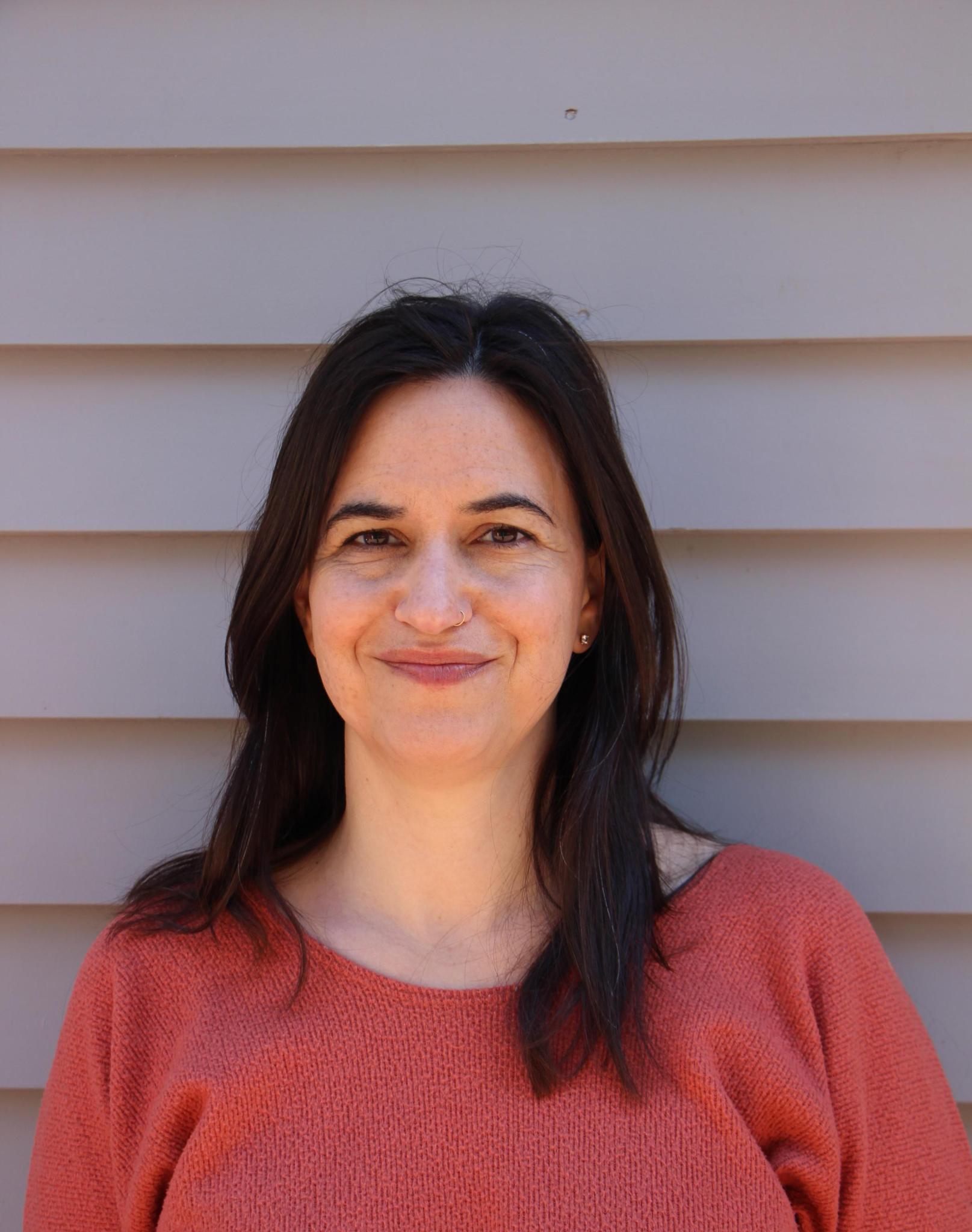
Founder, Beit Tzedek / Sidq
Eleven years in Jaffa — organizing, teaching, and raising a family in one of Israel's few truly mixed cities. I co-founded the Kids4Peace leadership programs, transforming a one-year dialogue initiative into a six-year program for Jewish and Palestinian youth. I spent six years as a Judaics and English teacher and pedagogical coordinator at a pluralistic school, designing curriculum and leading teams.
In Jaffa, I've served on the PTA and school board of the bilingual elementary school and organized protests against the closure of Arab–Jewish kindergartens. I completed my Master's degree at the Harvard Graduate School of Education in May 2026, where Beit Sidq was my design project — refined through research, community conversations, and sustained academic inquiry.
This school comes from a simple observation: every child who graduates from Jaffa's bilingual elementary school has nowhere to go. At age 12, they are funneled back into segregated systems at the most identity-critical years of their lives. The pipeline breaks. Beit Sidq is the missing piece.
What it takes to open the doors.
Expected to open in 2030
Opening grade
7th grade
Starting where the pipeline breaks — the year after bilingual elementary ends and segregation begins.
Students
Half Arabic-speaking, half Hebrew-speaking
Youth from Jaffa. Genuine parity from day one — in the classroom, in the hallways, in the language of instruction.
Leadership
Two co-directors
One Jewish Israeli, one Palestinian Israeli. Equal authority, shared leadership, and accountability toward the voices in the community.
Tuition
Sliding scale
No family turned away because of their financial situation.
Model
90-minute blocks, bilingual immersion
Private school with full curriculum freedom. Students prepare for Bagrut while developing as critical, multilingual thinkers.
We are building a private integrated high school that is both pedagogically viable and community-backed.
Get in TouchWe are looking for an Arabic-speaking co-director rooted in Jaffa — an equal partner to shape this school's direction, governance, and culture from the ground up.
Start a ConversationSign up for updates on our launch, events, and milestones. Be part of the community as it grows.
Sign Up for Updates